Migraine Headache (Hemicrania)
An authoritative clinical and educational profile of Migraine, covering trigeminovascular activation, cortical spreading depression (CSD), visual aura, constitutional homeopathic supportive management, and emergency red flags for thunderclap headache and intracranial hemorrhage.
Editorial review complete
Independent clinical validation is pending.
Quick Reference Facts
"Always evaluate thunderclap headaches or new headaches in patients over 50 with emergency neuroimaging to rule out intracranial hemorrhage or temporal arteritis."
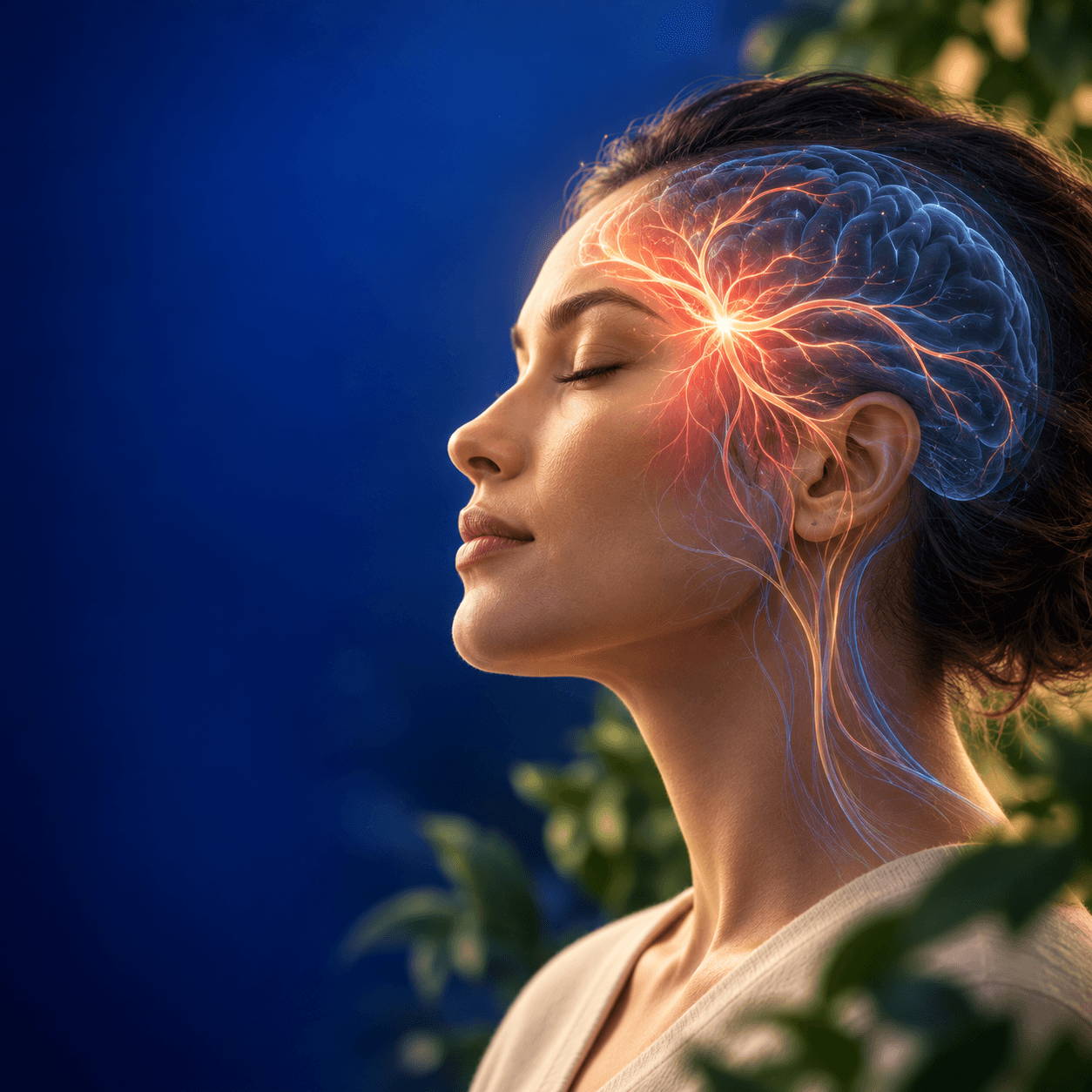
Neurovascular Model: Trigeminal Nerve Pathway Activation
Trigeminal sensory activation stimulates the release of vasoactive neuropeptides (CGRP), inducing painful neurogenic dural vasodilation.
Visual guide
 Homeo Healthcare
 Homeo Healthcare
 Homeo Healthcare
In simple words
Migraine is a chronic neurovascular disorder characterized by recurrent attacks of moderate to severe pulsating, typically unilateral headache pain lasting 4 to 72 hours, aggravated by physical activity and accompanied by nausea, photophobia, and phonophobia. Approximately 20–30% of patients experience transient focal neurological symptoms known as aura (most commonly visual scintillating scotomas) preceding the headache phase.
A primary neurological disorder of sensory processing characterized by episodic neurogenic inflammation, cortical spreading depression (CSD), and central and peripheral sensitization of the trigeminovascular system.
Common causes
- Hypersensitivity and neurogenic inflammatory activation of the trigeminovascular pathway
- Cortical spreading depression (CSD) wave triggering focal visual or sensory aura
- Vasoactive neuropeptide release, particularly Calcitonin Gene-Related Peptide (CGRP) and Substance P
- Genetic channelopathies and familial hemiplegic migraine gene mutations (CACNA1A, ATP1A2, SCN1A)
Risk Factors
- Hormonal fluctuations in estrogen (menstrual cycle, oral contraceptives, perimenopause)
- Irregular sleep-wake cycles, sleep deprivation, or excess sleep
- Psychological stress, emotional exhaustion, or 'let-down' periods after stress
- Dietary triggers: aged cheeses (tyramine), red wine, nitrites, artificial sweeteners, monosodium glutamate (MSG)
- Sensory overload: flickering bright lights, loud noises, strong perfumes, weather/barometric pressure changes
Common symptoms
- Unilateral, pulsating, throbbing moderate-to-severe headache, worse from physical exertion (walking, climbing stairs)
- Photophobia (extreme sensitivity to light) and phonophobia (sensitivity to sounds)
- Gastrointestinal symptoms: anorexia, nausea, vomiting, and delayed gastric emptying (gastroparesis)
- Visual aura: scintillating scotomas, fortification spectra (zigzag lines), central blurring, or temporary hemianopia
- Sensory aura: unilateral paresthesias (tingling/numbness) in fingers spreading up arm to face and tongue
Clinical Red Flags
Seek urgent medical attention at an emergency department or primary care clinic if you present with any of the following symptoms:
- Sudden thunderclap headache reaching maximum severity within 60 seconds (suspected subarachnoid hemorrhage)
- New focal neurological deficit (limb weakness, aphasia, ataxia, cranial nerve palsy) persisting beyond aura duration
- New-onset headache in an individual over 50 years of age with scalp tenderness or jaw claudication (suspected temporal arteritis)
- Headache associated with high fever, neck stiffness, confusion, or altered consciousness (suspected meningitis or encephalitis)
- Progressive worsening of headache frequency or severity following head trauma or in an immunocompromised individual
Lifestyle & diet support
Maintain regular sleep-wake schedules, consume balanced meals without skipping breakfast, stay adequately hydrated, maintain a detailed headache trigger diary, practice stress-relaxation techniques (mindfulness, biofeedback), and limit caffeine intake.
Treatment Approaches
Conventional Management
Includes acute abortive treatment (triptans, 5-HT1F receptor agonists, NSAIDs, oral CGRP receptor antagonists) and prophylactic therapy (beta-blockers like propranolol, topiramate, amitriptyline, CGRP monoclonal antibodies like erenumab/galcanezumab, and botulinum toxin for chronic migraine).
Homeopathic Approach
Homeopathic constitutional remedies (such as Natrum Muriaticum, Belladonna, Sanguinaria Canadensis, Spigelia, Iris Versicolor, Gelsemium, Bryonia) serve as supportive constitutional care to modulate autonomic reactivity, reduce attack frequency, and address individual symptom modalities alongside lifestyle and dietary trigger avoidance.
Frequently Asked Questions
Clinical & academic detailShow detailHide detail
Diagnosis & tests
Investigation Protocol
Diagnosed clinically according to the International Classification of Headache Disorders (ICHD-3) criteria. Routine neuroimaging is not required for typical recurrent presentations, but Brain MRI or CT angiography is mandatory for atypical auras, sudden new onset after age 50, or when red flag 'SNOOP' criteria are present.
Differential Diagnosis
Differentiate Migraine from Tension-Type Headache (bilateral band-like non-throbbing), Cluster Headache (strictly unilateral orbital autonomic headache), Cervicogenic Headache, Sinusitis, Temporal (Giant Cell) Arteritis, Subarachnoid Hemorrhage, and Cerebral Venous Sinus Thrombosis.
Differential Diagnosis Matrix
Differentiate Migraine from Tension-Type Headache (bilateral band-like non-throbbing), Cluster Headache (strictly unilateral orbital autonomic headache), Cervicogenic Headache, Sinusitis, Temporal (Giant Cell) Arteritis, Subarachnoid Hemorrhage, and Cerebral Venous Sinus Thrombosis.
Reference Citations & Evidence Sources
Classical Homeopathic Literature
- CIT-0007Hahnemann S.. "The Chronic Diseases: Their Peculiar Nature and Their Homoeopathic Cure." Adolph Arnold (1828).
Materia Medica & Keynotes
- CIT-0004Hahnemann S.. "Materia Medica Pura." Adolph Arnold (1811).
- CIT-0005Kent J. T.. "Lectures on Homoeopathic Materia Medica." Boericke & Tafel (1905).
- CIT-0006Boericke W.. "Pocket Manual of Homoeopathic Materia Medica." Boericke & Runyon (1901).
Clinical Reviews & Textbooks
- CIT-0023National Center for Complementary and Integrative Health. "Homeopathy: What You Need To Know." National Institutes of Health (2021).
Clinical Connections
Related Symptoms
Related Investigations
Related Comparisons
Seeking Expert Consultation?
Book an online video session with Dr. Narayan Jethwani to get an individualized constitutional homeopathic protocol tailored to your case.
Medical Safety Disclaimer
All content on the Homeo Healthcare platform is strictly for educational purposes and is not personal medical advice, diagnosis, or treatment. Homeopathic remedy considerations are provided for clinician review or require individualized consultation with a qualified physician. Never delay seeking professional medical advice or emergency medical care due to content you have read on this website.