
Your cart is currently empty!
Bronchial Asthma and Homeopathic Treatment: Breathe Freely with Individualized Care
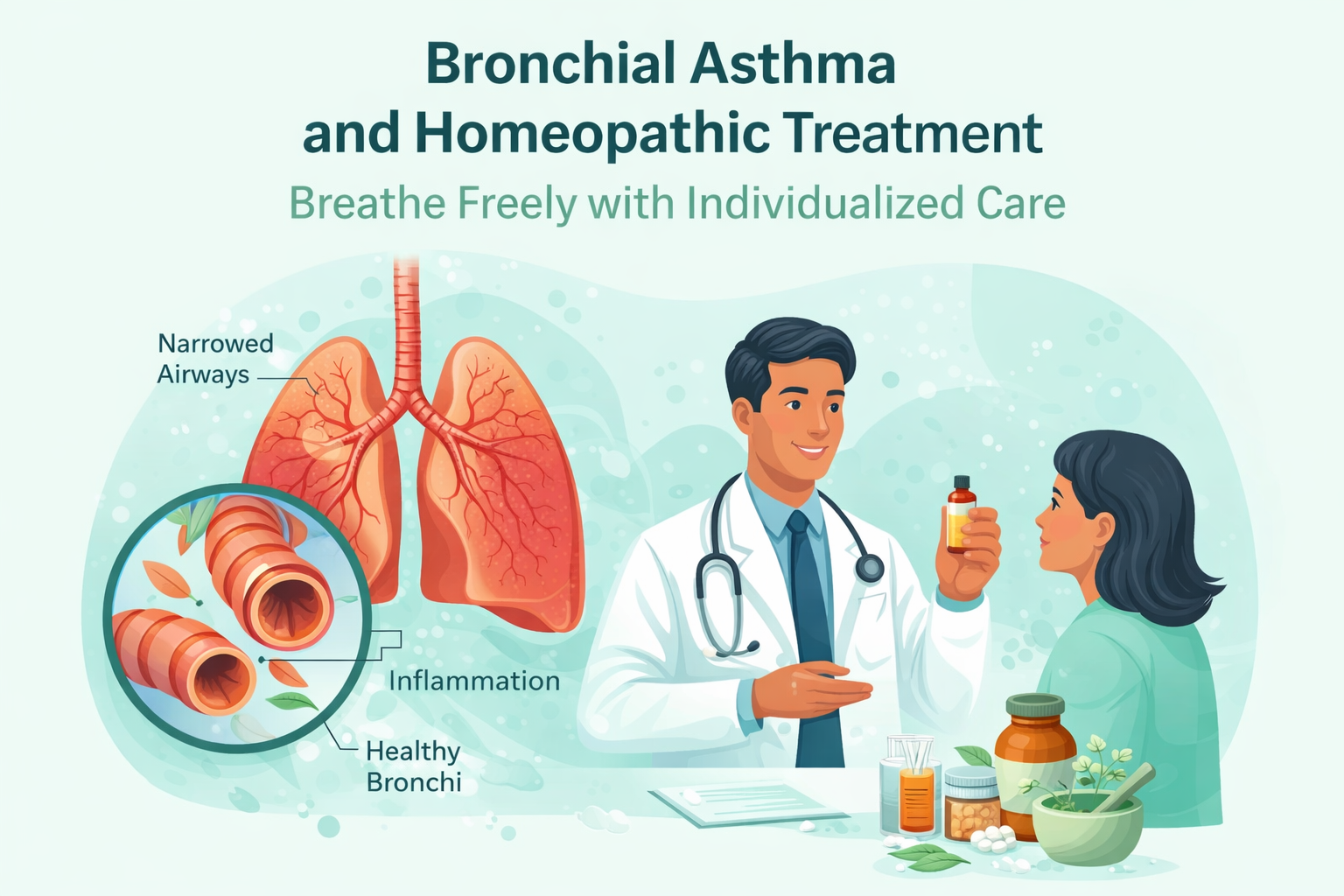
By Dr. Narayan Jethwani, MD (Homeopathy) • Ramkrishna Homeopathic Consultancy, Baner, Pune
Key Insight: Asthma is not merely a disease of the lungs — it is a constitutional hypersensitivity affecting the entire person. Classical homeopathy, when practiced according to Evidence-Based principles, goes beyond managing symptoms to treating the immune susceptibility that makes airways over-reactive in the first place. The result: fewer attacks, reduced medication dependency, and lasting improvement in quality of life.
Introduction
If you wake up at 3 am struggling to breathe, reach for your inhaler before every exercise session, or live with a constant low-grade wheeze that follows you through the year — you are not alone.
Bronchial asthma affects over 300 million people worldwide and is one of the most common chronic diseases in India, where air quality, dust exposure, and tropical allergen loads make it particularly prevalent. Despite advances in conventional medicine, a significant number of patients remain poorly controlled on inhalers and medications alone.
This is where individualized homeopathic treatment offers a scientifically grounded, complementary path — one that works not just on the airways, but on the underlying constitutional sensitivity that causes them to react.
In this article, I draw on over 20 years of clinical practice treating asthma patients at Ramkrishna Homeopathic Consultancy to give you an honest, evidence-informed guide to homeopathy for bronchial asthma.
What Is Bronchial Asthma?
Bronchial asthma is a chronic inflammatory disease of the airways characterized by recurring episodes of wheezing, breathlessness, chest tightness, and cough — typically worst at night or in the early morning.
The underlying mechanism involves three simultaneous processes in the bronchi (airway tubes):
- Airway inflammation: The inner lining of the bronchi becomes inflamed, swollen, and sensitive
- Bronchospasm: The smooth muscles surrounding the airways contract, narrowing the passage
- Mucus hypersecretion: Excessive, sticky mucus further obstructs airflow
Together, these reduce the diameter of the airways — making it harder to breathe out than in, producing the characteristic wheeze.
In homeopathic understanding, the bronchial tubes are simply the location where the disease manifests. The real disease lies in an immune system that has become chronically hypersensitive — a susceptibility that homeopathy is specifically designed to address.
Causes of Bronchial Asthma
Asthma is a complex, multifactorial disease. No single cause explains every patient. Clinical experience consistently reveals an interaction between genetic susceptibility and environmental triggers:
Primary Causes and Risk Factors
- Genetic predisposition: Family history of asthma, eczema, or allergic rhinitis (the “atopic triad”) significantly raises risk
- Allergens: House dust mites, pet dander, cockroach allergens, pollen, and mould are the most common triggers in India
- Air pollution: Vehicular exhaust, construction dust, and indoor cooking smoke are major contributors in urban India
- Respiratory infections: Viral infections in early childhood — especially RSV and rhinovirus — can sensitize airways permanently
- Occupational exposures: Flour dust, chemical fumes, wood dust, and animal proteins in certain occupations
- Tobacco smoke: Both active smoking and passive exposure increase risk and worsen severity
- Cold air and weather changes: A very common trigger in Indian climate transitions
- Exercise: Exercise-induced bronchoconstriction is common, especially in cold dry air
- Emotional stress and anxiety: Profoundly underappreciated in conventional medicine, but centrally important in homeopathic case-taking
- GERD (acid reflux): Micro-aspiration of stomach acid can trigger and maintain airway inflammation
In homeopathic practice, the maintaining cause — what keeps the disease going — matters as much as the triggering cause. This includes suppression of skin eruptions, unresolved grief, recurrent antibiotic overuse, and chronic stress.
Types of Bronchial Asthma
- Allergic (extrinsic) asthma: The most common form. Triggered by identifiable allergens. Usually begins in childhood. Associated with other atopic conditions. Responds well to constitutional homeopathy.
- Non-allergic (intrinsic) asthma: Triggered by non-allergenic factors — cold air, exercise, stress, infections. Common in adults. IgE levels are normal.
- Occupational asthma: Caused by workplace exposures. Removing the trigger is essential alongside treatment.
- Exercise-induced asthma: Airways narrow during or after physical exertion. Often coexists with other types.
- Cough-variant asthma: Chronic dry or productive cough is the only symptom. Often misdiagnosed. Very common in children and frequently seen in homeopathic practice.
- Nocturnal asthma: Symptoms consistently worse at night or early morning. Linked to circadian changes in cortisol and airway tone. Several key homeopathic remedies are chosen specifically for this pattern.
- Severe or brittle asthma: Poorly controlled despite maximum conventional therapy. Requires specialist management; homeopathy plays a supportive role.
Symptoms of Bronchial Asthma

Asthma symptoms vary in frequency, severity, and pattern between individuals — one of the most important observations in homeopathic prescribing. The exact character of the cough and wheeze is clinically significant.
Common Symptoms
- 💨 Recurrent wheezing — a high-pitched whistling sound when breathing out
- 🔥 Shortness of breath, especially on exertion or at night
- 💥 Chest tightness or a sense of constriction, often described as “a band tightening around the chest”
- 💨 Chronic cough — typically dry, worse at night, after laughter, or with cold air exposure
- 💤 Thick, sticky mucus that is difficult to expectorate
- 😴 Sleep disturbance from nocturnal attacks
- 🦸 Fatigue from the effort of breathing during acute attacks
Warning signs of a severe attack requiring emergency care: Rapid worsening despite inhaler use • Inability to speak full sentences • Cyanosis (bluish lips or fingernails) • Silent chest (no wheeze despite obvious breathing difficulty) — see the emergency section below.
Diagnosis of Bronchial Asthma
Accurate diagnosis is essential before starting any treatment — homeopathic or otherwise. Do not self-diagnose asthma. The following investigations are standard:
- Spirometry (PFT — Pulmonary Function Test): Measures FEV1 and FVC. The gold standard for confirming airflow obstruction and assessing severity.
- Peak Flow Meter: Simple home monitoring tool for tracking day-to-day variability in PEFR.
- Bronchodilator reversibility test: Spirometry before and 20 minutes after a bronchodilator. A ≥12% and 200mL improvement in FEV1 confirms asthma.
- Chest X-ray: Rules out other conditions (pneumonia, COPD, cardiac causes).
- Allergy testing (Skin Prick Test / IgE panel): Identifies specific allergen triggers in allergic asthma.
- Blood tests: Eosinophil count, total IgE — markers of allergic inflammation.
- FeNO (Fractional exhaled Nitric Oxide): Measures airway eosinophilic inflammation. Increasingly used in specialist practice.
At Homeo Healthcare, every patient presents their diagnostic reports before the homeopathic consultation. This is a cornerstone of our Evidence-Based Homeopathy (EBH) protocol — ensuring we understand the objective disease severity before selecting a constitutional remedy.
Conventional Treatment Overview
Conventional asthma management follows an internationally recognized stepwise protocol. It is important to understand this clearly — because homeopathy works alongside these treatments, never as a replacement.
- Short-acting bronchodilators (SABAs): Salbutamol (Ventolin) inhalers for immediate relief. Essential — every asthma patient should carry one.
- Inhaled corticosteroids (ICS): Budesonide, fluticasone — the most effective long-term controller medication. Reduce inflammation.
- Long-acting bronchodilators (LABAs): Formoterol, salmeterol — used in combination with ICS for moderate-severe asthma.
- Leukotriene receptor antagonists: Montelukast — useful in allergic and exercise-induced asthma.
- Biological therapies: Omalizumab and other monoclonal antibodies for severe allergic asthma.
- Oral corticosteroids: Short courses for acute exacerbations. Long-term use is associated with significant side effects.
Conventional treatment effectively controls symptoms in most patients but does not change the underlying immune hypersensitivity. Many patients remain dependent on escalating medication doses. This is precisely where constitutional homeopathy offers meaningful additional benefit.
The Homeopathic Approach to Bronchial Asthma
Homeopathy for bronchial asthma is fundamentally different from conventional management — not because it ignores the disease, but because it asks a different question:
Not “How do I suppress this wheeze?” but “Why does this person’s immune system respond to ordinary triggers with such an extreme reaction?”
How the Homeopathic Case-Taking Works
In a thorough homeopathic consultation for asthma, I explore:
- The exact character of the wheeze and cough — dry or productive? Worse lying down or sitting up? Better with warmth or cold air?
- Time modalities — attacks at 2 am vs. 4 am point to completely different remedies
- Triggering and relieving factors — dampness, cold, exertion, emotional upsets, food
- Emotional and mental picture — anxiety, perfectionism, grief, performance pressure
- Full medical history — history of eczema, urticaria, repeated ear infections, suppressions
- Family history of allergic disease
- Thermal sensitivity, food cravings and aversions
- Current investigations — spirometry, IgE, eosinophil counts
This comprehensive picture allows for the selection of the constitutional similimum — the single remedy that best matches the patient as a whole, not just the asthma symptoms.
In clinical practice, well-chosen constitutional homeopathic treatment consistently produces:
- Reduction in frequency and severity of asthmatic attacks
- Gradual tapering of rescue inhaler use (always supervised by the physician)
- Improved exercise tolerance and better sleep quality
- Reduced susceptibility to respiratory infections that trigger attacks
- Overall improvement in vitality and immunity
Important: No patient is ever advised to stop conventional medication abruptly. The goal is to improve respiratory health to the point where medications can be gradually reduced under the supervision of both the chest physician and the homeopathic physician.
Common Homeopathic Remedies for Bronchial Asthma
Educational note: The following remedy descriptions are for general understanding only. Homeopathic treatment is always individualized after a complete case consultation. Self-prescribing chronic constitutional conditions is not recommended.
Arsenicum album Nocturnal / Anxiety
The most commonly indicated remedy in anxious, restless asthmatic patients. Attacks typically between midnight and 3 am. Burning sensation in the chest. Patient is exhausted but cannot lie still. Wants warmth and warm drinks. Intense anxiety — fear of being alone, fear of death. Careful, meticulous, highly organized personality. Often associated with allergic rhinitis and eczema.
Natrum sulphuricum Damp / Humid Weather
The leading remedy for asthma triggered by damp, humid, or rainy weather — particularly common in coastal India and during monsoon season. Attacks in the early morning (4–5 am). Greenish or yellowish expectoration. Patient holds chest with both hands while coughing. Often associated with liver involvement and a history of head injury. Emotionally reserved, responsible, prone to sadness.
Ipecacuanha Spasmodic / Children
Intense, spasmodic cough ending in vomiting. Persistent nausea with almost every complaint. Rattling mucus in the chest. Patient turns blue with coughing fits. Common in children with allergic asthma. Tongue remains clean despite severe nausea. Worse with warmth and in warm rooms.
Antimonium tartaricum COPD / Elderly / Rattling
Loud rattling and bubbling of mucus in the chest that cannot be expectorated. Great drowsiness and weakness accompanying respiratory distress. Gasping for breath. Often seen in elderly patients and post-infection asthma with retained secretions. The chest seems full but nothing comes out.
Spongia tosta Barking / Dry
Dry, barking, croupy cough with a sawing sound. Completely dry chest — no mucus. Better with warm food and drinks. Marked anxiety during attacks. Often follows Aconitum in sudden-onset croup-like asthma.
Sulphur Skin Suppression
A deeply important remedy when asthma developed after suppression of a skin eruption (eczema treated with steroids, urticaria suppressed). Burning sensations everywhere. Worse at 11 am and at night. A critical remedy for unlocking the skin-lung axis in atopic eczema-asthma patients.
Blatta orientalis Obese / Humid
A specific Indian homeopathic remedy for asthma. Particularly indicated in obese individuals with breathlessness from minimal exertion, aggravated in humid weather. Often seen in sedentary, overweight patients with marked dyspnoea on climbing stairs.
The Evidence-Based Perspective on Homeopathy for Asthma
At Homeo Healthcare, I practice Evidence-Based Homeopathy (EBH) — integrating classical case-taking with clinical research, objective diagnostic data, and measurable outcomes. Here is an honest summary of what the research tells us:
- A double-blind RCT published in the Lancet (1994) by Reilly et al. found that homeopathic treatment produced significantly better lung function improvement than placebo in patients with allergic asthma.
- Systematic reviews on homeopathy in respiratory conditions show promising but mixed evidence — largely due to the difficulty of applying standardized trial designs to individualized medicine. More rigorous RCTs are ongoing.
- Observational studies from integrative medicine clinics in Europe consistently show reduction in rescue inhaler use, improved PEFR scores, and better quality of life in asthmatic patients receiving individualized homeopathic treatment alongside conventional care.
- Clinical experience across 20+ years of practice shows that allergic and atopic asthma in children and young adults responds particularly well to constitutional treatment, especially when there is a clear history of eczema-asthma transition.
I maintain transparent communication with patients: homeopathy is a powerful adjunct to asthma management. It is not a substitute for bronchodilators during acute attacks, and it requires time — typically 3–6 months of constitutional treatment to see meaningful change in attack frequency. Severity and chronicity of the condition, adherence to dietary and lifestyle guidance, and individual constitutional responsiveness all influence outcomes.
Lifestyle and Dietary Guidance for Asthma Patients
Homeopathy works most effectively when combined with appropriate lifestyle modifications. These are not optional extras — they are an integral part of the treatment plan.
✅ Recommended Lifestyle Practices
- Practice diaphragmatic breathing and pranayama daily — Anulom Vilom and Bhramari are particularly beneficial for bronchoconstriction and stress-related triggering
- Maintain a daily peak flow diary to track variability and identify your personal trigger patterns
- Use an air purifier in the bedroom — the room where you spend 8 hours asleep is the most critical allergen exposure environment
- Wash bedding weekly in hot water (>60°C) to kill dust mites — the single most common asthma trigger in India
- Keep pets out of the bedroom if pet dander is a confirmed trigger
- Exercise in warm, humid environments — avoid cold dry air during exertion; always warm up slowly
- Maintain healthy body weight — obesity worsens asthma severity significantly
- Yoga asanas (particularly chest-opening postures) under guidance can improve thoracic flexibility and breathing efficiency
🍽️ Diet Guidance
- Anti-inflammatory foods: Turmeric (curcumin), ginger, garlic, omega-3 rich flaxseeds and walnuts — all reduce airway inflammation naturally
- Vitamin C and antioxidants: Amla (Indian gooseberry), berries, citrus, tomatoes, spinach
- Stay well hydrated — mucus becomes thicker and harder to expectorate when you are dehydrated
- Warm fluids: Tulsi (Holy Basil) and ginger tea have documented bronchodilatory and anti-inflammatory properties
- Avoid: Cold foods and drinks during an episode; preserved and processed foods (sulfites, artificial colors); excessive dairy in mucus-prone patients; alcohol
- Food allergies: If specific foods trigger attacks, a strict elimination trial is recommended
When to Seek Immediate Medical Help
🚨 Emergency Warning Signs — Call for Help Immediately
- Severe breathlessness that does not improve with 2–4 puffs of rescue inhaler within 10–15 minutes
- Unable to speak in full sentences due to breathlessness
- Blue or grey discolouration of lips or fingernails (cyanosis)
- A “silent chest” — chest heaving but no wheeze audible. Indicates critical airway narrowing.
- Rapid heart rate over 120 beats per minute
- Confusion, drowsiness, or altered consciousness
- PEFR below 33% of your personal best
These are signs of a potentially life-threatening acute severe asthma attack. Go to the nearest emergency room immediately or call 108. Do not rely on homeopathic remedies in an acute emergency — use your rescue inhaler and get emergency help.
Frequently Asked Questions (FAQs)
Q1: Can homeopathy cure bronchial asthma permanently?
Homeopathy does not use the word “cure” in the way that implies eradicating a diagnosed disease. What it does, in practice, is progressively reduce the frequency and severity of attacks, decrease dependence on inhalers, and in many patients — particularly children with allergic asthma — produce a state of prolonged wellness where the condition no longer significantly affects daily life. Long-term outcomes depend on disease severity, chronicity, adherence, and lifestyle compliance.
Q2: Should I stop my inhalers when I start homeopathic treatment?
Absolutely not. Never stop prescribed asthma medication without explicit guidance from your pulmonologist. Homeopathic treatment works alongside conventional medication. As constitutional treatment takes effect over months, the need for rescue medication typically decreases naturally — at which point your doctor may consider a supervised step-down. This decision is always made collaboratively between you, your chest physician, and your homeopathic physician.
Q3: How long does homeopathic treatment for asthma take to show results?
Most patients notice meaningful improvement in attack frequency and severity within 3–6 months of constitutional treatment. General well-being, sleep quality, and energy often improve sooner. The deeper constitutional change — reduction of immune hypersensitivity — takes 12–24 months of consistent treatment in most chronic cases.
Q4: Is homeopathy safe for children with asthma?
Yes. Homeopathic remedies are among the safest interventions available for children — non-toxic, non-addictive, and with no drug interactions. Childhood allergic asthma with the atopic triad (asthma + eczema + hay fever) responds particularly well to constitutional homeopathic treatment. Children who begin constitutional treatment early show the best long-term outcomes in clinical practice.
Q5: Can homeopathy help during an acute asthma attack?
Homeopathic remedies can be used as supportive care during mild episodes alongside bronchodilators. Remedies like Arsenicum album, Ipecacuanha, and Antimonium tartaricum have well-documented acute indications. However, in a moderate or severe attack, your rescue inhaler and emergency medical care always take absolute priority. Homeopathy should never replace emergency bronchodilator therapy during an acute attack.
Q6: What is the best homeopathic remedy for asthma?
There is no single “best” homeopathic remedy for asthma. The correct remedy is the one that best matches your complete individual picture — your exact symptom pattern, time modalities, emotional state, constitution, thermal sensitivity, and disease history. Arsenicum album, Natrum sulphuricum, Sulphur, Ipecacuanha, Blatta orientalis, and Antimonium tartaricum are among the most frequently indicated — but which applies to you requires a proper consultation.
Q7: Can adults with long-standing asthma benefit from homeopathy?
Yes, though results may be slower in adults with 15–20 years of established asthma. Constitutional treatment can still meaningfully reduce attack severity, improve exercise tolerance, reduce mucus production, and improve quality of life — even when some structural airway changes have occurred. It also significantly reduces the side-effect burden from long-term corticosteroid use.
Conclusion
Bronchial asthma is a complex, chronic, and highly individual disease. Conventional medicine provides essential symptom control and prevents life-threatening exacerbations — and it must always remain the anchor of your asthma management plan.
What homeopathy adds to this picture is profound: a system that looks at the whole person — their immune susceptibility, emotional state, inherited tendencies, and constitutional type — and applies a precisely matched remedy that gradually reduces the fundamental hypersensitivity underlying every asthmatic attack.
Over 20 years of clinical practice, I have seen asthmatic children outgrow their condition with constitutional treatment. I have seen adults halve their rescue inhaler use over six months. I have seen the skin-lung axis in atopic eczema-asthma patients resolve from the inside out with the right constitutional remedy.
The goal is not to replace your inhaler with a small sugar pill. The goal is to improve your health so deeply and fundamentally that your body no longer needs to reach for it as often — and when it does, it responds more effectively.
That is what Evidence-Based Homeopathy offers for bronchial asthma.
📚 Related Articles
- Allergic Rhinitis and Homeopathic Treatment: Stop Sneezing Naturally
- Lung Care and Homeopathic Treatment: Natural Approach to Respiratory Wellness
- Sinusitis and Homeopathic Treatment: A Holistic Approach to Relief
- Evidence-Based Homeopathy: Bridging Tradition and Modern Science
NJ
Book a Personalized Consultation
Receive individualized homeopathic treatment for bronchial asthma based on your complete health picture, spirometry reports, and constitutional assessment.
Dr. Narayan Jethwani, MD (Homeopathy)
Ramkrishna Homeopathic Consultancy • Baner, Pune
20+ Years Clinical Experience • Evidence-Based Homeopathy
Leave a Reply