Urinary Tract Infection (UTI / Acute Cystitis & Pyelonephritis)
An authoritative clinical and educational profile of Urinary Tract Infections (UTI), covering uropathogenic E. coli colonization, acute cystitis, recurrent UTI pathophysiology, constitutional homeopathic supportive management, and emergency red flags for acute ascending pyelonephritis and uroseptic bacteremia.
Editorial review complete
Independent clinical validation is pending.
Quick Reference Facts
"Flank tenderness (CVA tenderness) paired with fever and dysuria immediately differentiates upper tract pyelonephritis from simple lower tract cystitis."
Visual guide
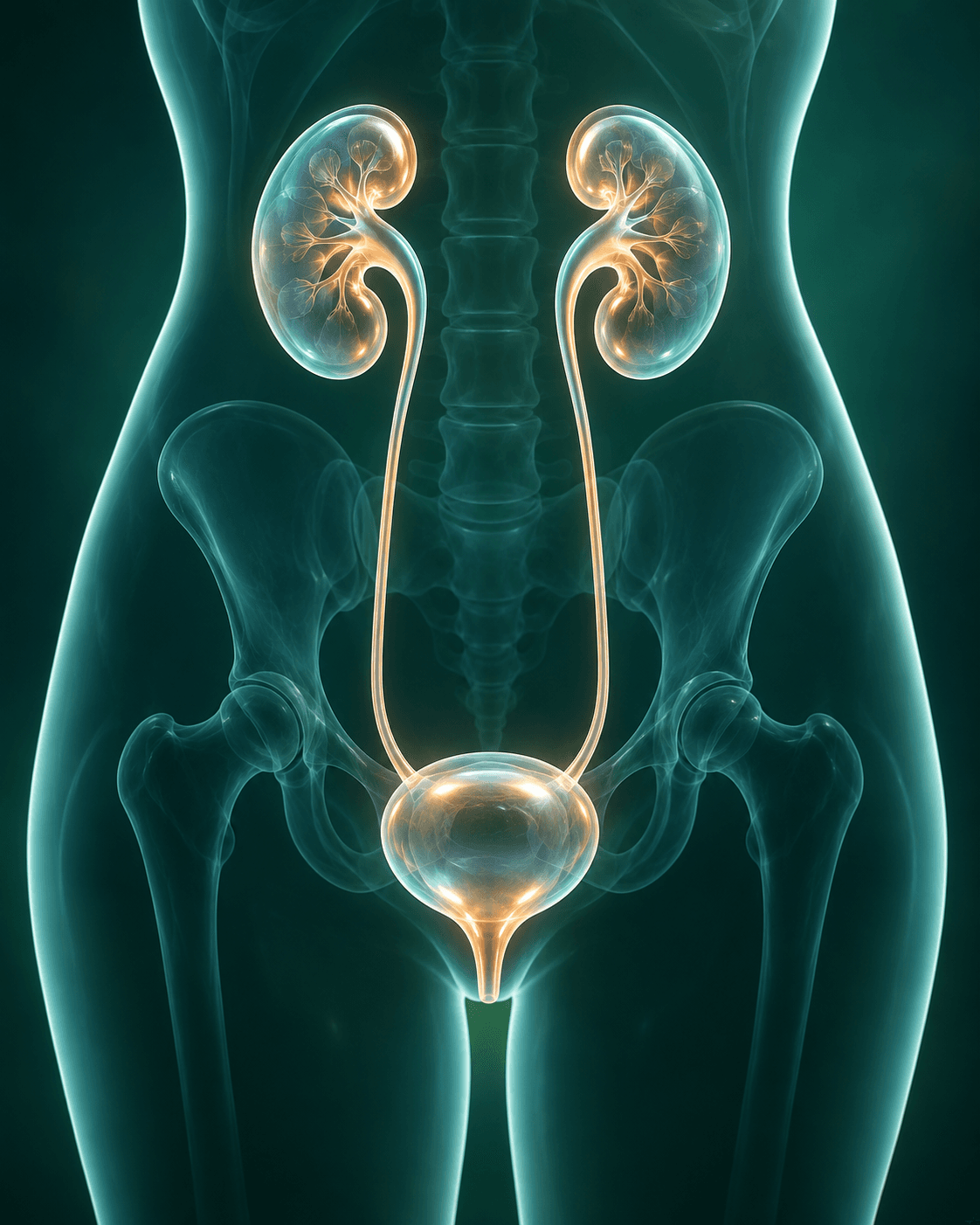
 Homeo Healthcare
 Homeo Healthcare
 Homeo Healthcare
In simple words
Urinary Tract Infection (UTI) represents microbial invasion and inflammation of the urinary tract epithelium, ranging from uncomplicated lower urinary tract infection (acute bacterial cystitis) to upper tract involvement (acute pyelonephritis). Predominantly driven by uropathogenic Escherichia coli (UPEC) ascending from the perianal microbiota, it presents clinically with severe dysuria (burning micturition), urinary frequency, urgency, suprapubic tenderness, and cloudy, foul-smelling or blood-tinged urine.
An infection of the urinary tract characterized by significant bacteriuria (typically ≥10^5 CFU/mL in clean-catch midstream urine or ≥10^3 CFU/mL in symptomatic females) accompanied by clinical symptoms of urothelial inflammation.
Common causes
- Ascending colonization by uropathogenic Escherichia coli (UPEC; responsible for 75–90% of uncomplicated community UTIs)
- Other uropathogens: Klebsiella pneumoniae, Proteus mirabilis, Enterococcus faecalis, Staphylococcus saprophyticus, Pseudomonas aeruginosa
- Bacterial virulence factors: type 1 fimbriae and P-fimbriae facilitating urothelial adherence and intracellular bacterial community (IBC) formation
- Short female urethral length and close anatomical proximity of the external urethral meatus to the anus
Risk Factors
- Female gender (up to 50–60% of women experience at least one UTI in their lifetime)
- Recent sexual intercourse ('honeymoon cystitis') and use of spermicides or diaphragm contraception
- Postmenopausal estrogen deficiency (loss of protective vaginal Lactobacillus species and elevated vaginal pH)
- Incomplete bladder emptying: benign prostatic hyperplasia (BPH), neurogenic bladder, pelvic organ prolapse, urinary strictures
- Indwelling urinary catheters, immunosuppression, poorly controlled diabetes mellitus, and urolithiasis
Common symptoms
- Dysuria: intense, sharp, burning or scalding sensation in the urethra during and immediately following urination
- Urinary frequency (voiding small volumes frequently) and urgent, compelling desire to void (urinary urgency)
- Suprapubic aching, pelvic heaviness, and lower abdominal discomfort
- Cloudy, turbid, malodorous urine, and microscopic or gross terminal hematuria
- Systemic symptoms in pyelonephritis: high fever, shaking chills/rigors, nausea, vomiting, and unilateral or bilateral costovertebral angle (flank) tenderness
Clinical Red Flags
Seek urgent medical attention at an emergency department or primary care clinic if you present with any of the following symptoms:
- Ascending acute pyelonephritis: high spiking fever, shaking chills, severe flank/costovertebral angle pain, and vomiting (requires immediate physician evaluation and parenteral antibiotics)
- Uroseptic shock: hypotension, tachycardia, altered mental status, hypothermia, or tachypnea (life-threatening emergency requiring intensive care resuscitation)
- Gross continuous hematuria with passage of large blood clots causing acute urinary retention
- UTI symptoms in pregnant women (asymptomatic bacteriuria or cystitis requires prompt antibiotic therapy to prevent preterm labor and maternal pyelonephritis)
Lifestyle & diet support
Drink plenty of water throughout the day to flush bacteria from the urinary tract, void promptly following sexual intercourse, wipe from front to back after bowel movements, avoid irritating feminine hygiene sprays, douches, and scented bath products, take showers rather than bubble baths, and avoid delaying urination when the urge arises.
Treatment Approaches
Conventional Management
First-line empirical antibiotic regimens for uncomplicated acute cystitis include nitrofurantoin monohydrate/macrocrystals (5 days), trimethoprim-sulfamethoxazole (TMP-SMX; 3 days where local resistance <20%), or fosfomycin trometamol (single dose). Acute pyelonephritis requires fluoroquinolones (ciprofloxacin) or parenteral cephalosporins (ceftriaxone) based on culture sensitivity. Prophylaxis includes non-antimicrobial options like D-mannose, cranberry proanthocyanidins, and vaginal estrogen in postmenopausal women.
Homeopathic Approach
Homeopathic constitutional and urinary tract remedies (such as Cantharis Vesicatoria, Staphysagria, Sarsaparilla, Equisetum Hyemale, Apis Mellifica, Berberis Vulgaris, Chimaphila Umbellata) serve as supportive care to ease burning dysuria, soothe post-coital urethral spasms, and assist recurring bladder irritability alongside adequate fluid intake and conventional antibiotic treatment where indicated.
Frequently Asked Questions
Clinical & academic detailShow detailHide detail
Diagnosis & tests
Investigation Protocol
Diagnosed clinically based on characteristic lower urinary symptoms, supported by rapid urine dipstick analysis (positive leukocyte esterase and positive urinary nitrites) and microscopic urinalysis (pyuria ≥10 WBCs/hpf and bacteriuria). Clean-catch midstream urine culture and antimicrobial susceptibility testing is the gold standard, mandatory for recurrent UTIs, treatment failures, pregnancy, men, and suspected pyelonephritis.
Differential Diagnosis
Differentiate Lower UTI from Interstitial Cystitis / Bladder Pain Syndrome (BPS), Vulvovaginal Candidiasis, Trichomoniasis, Chlamydia trachomatis / Neisseria gonorrhoeae Urethritis, Genitourinary Syndrome of Menopause (atrophic vaginitis), and Bladder Carcinoma.
Differential Diagnosis Matrix
Differentiate Lower UTI from Interstitial Cystitis / Bladder Pain Syndrome (BPS), Vulvovaginal Candidiasis, Trichomoniasis, Chlamydia trachomatis / Neisseria gonorrhoeae Urethritis, Genitourinary Syndrome of Menopause (atrophic vaginitis), and Bladder Carcinoma.
Reference Citations & Evidence Sources
Classical Homeopathic Literature
- CIT-0007Hahnemann S.. "The Chronic Diseases: Their Peculiar Nature and Their Homoeopathic Cure." Adolph Arnold (1828).
Materia Medica & Keynotes
- CIT-0004Hahnemann S.. "Materia Medica Pura." Adolph Arnold (1811).
- CIT-0005Kent J. T.. "Lectures on Homoeopathic Materia Medica." Boericke & Tafel (1905).
- CIT-0006Boericke W.. "Pocket Manual of Homoeopathic Materia Medica." Boericke & Runyon (1901).
Clinical Reviews & Textbooks
- CIT-0023National Center for Complementary and Integrative Health. "Homeopathy: What You Need To Know." National Institutes of Health (2021).
No clinical connections registered for this topic.
Seeking Expert Consultation?
Book an online video session with Dr. Narayan Jethwani to get an individualized constitutional homeopathic protocol tailored to your case.
Medical Safety Disclaimer
All content on the Homeo Healthcare platform is strictly for educational purposes and is not personal medical advice, diagnosis, or treatment. Homeopathic remedy considerations are provided for clinician review or require individualized consultation with a qualified physician. Never delay seeking professional medical advice or emergency medical care due to content you have read on this website.