Polycystic Ovary Syndrome (PCOS)
An authoritative clinical profile of Polycystic Ovary Syndrome (PCOS) covering 2023 Rotterdam criteria, hyperandrogenism vs insulin resistance dynamics, ovarian torsion emergency red flags, and metabolic screening non-replacement rules.
Editorial review complete
Independent clinical validation is pending.
Quick Reference Facts
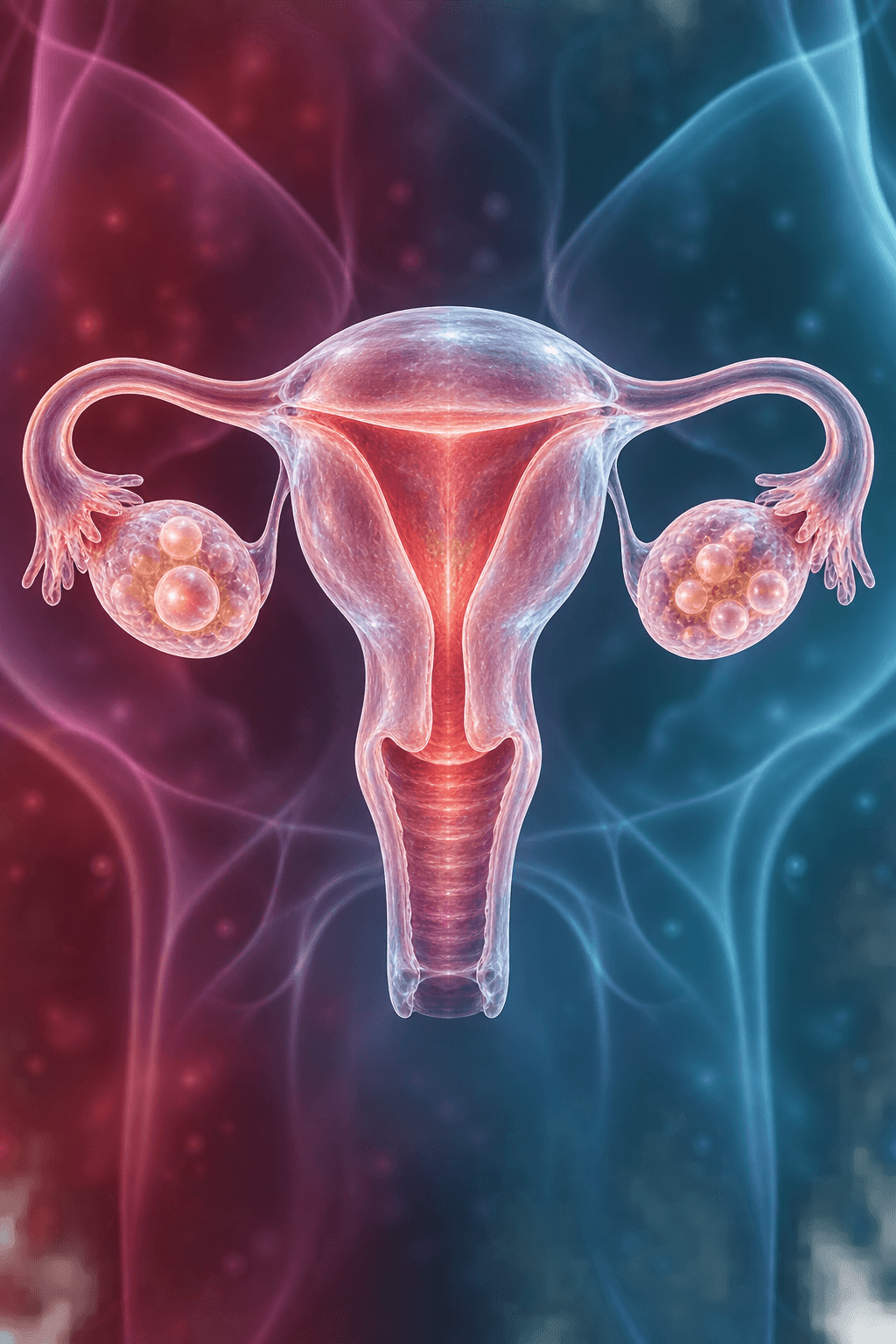
Visual guide
 Homeo Healthcare
 Homeo Healthcare
 Homeo Healthcare
In simple words
Polycystic Ovary Syndrome (PCOS) is a complex endocrine-metabolic disorder defined by the 2023 International Rotterdam criteria requiring at least 2 of 3 features: ovulatory dysfunction (oligo-/amenorrhea), hyperandrogenism (clinical or biochemical), and polycystic ovarian morphology on ultrasound [D0013-KEYNOTES, CIT-0045].
A heterogenous reproductive and metabolic endocrinopathy characterized by anovulation, hyperandrogenemia, insulin resistance, and characteristic ovarian follicular microcysts.
Common causes
- Insulin resistance and compensatory hyperinsulinemia stimulating ovarian androgen synthesis [D0013-KEYNOTES, CIT-0045]
- Altered hypothalamic-pituitary LH/FSH pulse frequency favoring excess luteinizing hormone secretion
- Genetic polygenic architecture interacting with sedentary lifestyle and weight gain
Risk Factors
- First-degree family history of PCOS or Type 2 Diabetes Mellitus
- Obesity, central adiposity, and metabolic syndrome
- Premature adrenarche or early-onset childhood weight gain
Common symptoms
- Irregular, infrequent, or absent menstrual cycles (oligo- or amenorrhea) [D0013-KEYNOTES, CIT-0045]
- Hirsutism (excessive terminal facial/body hair), severe recalcitrant acne, and androgenic alopecia
- Acanthosis nigricans (velvety hyperpigmentation of neck/axillae), weight gain, and infertility
Lifestyle & diet support
Engage in 150+ minutes of weekly aerobic and resistance exercise, consume a low-glycemic Mediterranean-style diet, manage stress, and track menstrual cycle regularity.
Treatment Approaches
Conventional Management
Management includes lifestyle weight management, combined oral contraceptive pills (COCPs) for cycle regulation, metformin for insulin resistance, anti-androgens (spironolactone) for hirsutism, and letrozole/clomiphene for ovulation induction [CIT-0045].
Homeopathic Approach
Homeopathic remedies (such as Pulsatilla, Sepia, Calcarea Carbonica, Thuja) provide supportive constitutional care to assist in menstrual regularity, soothe associated acne, and enhance general vitality alongside metabolic monitoring.
Frequently Asked Questions
Clinical & academic detailShow detailHide detail
Diagnosis & tests
Investigation Protocol
Evaluated via serum free/total testosterone, DHEAS, LH/FSH ratio, fasting glucose/insulin (OGTT), lipid panel, serum progesterone, and pelvic transvaginal/abdominal ultrasound showing ≥20 follicles per ovary or volume ≥10 mL [CIT-0045].
Differential Diagnosis
Differentiate PCOS from Thyroid Dysfunction, Hyperprolactinemia, Non-Classic Congenital Adrenal Hyperplasia (NCCAH), Cushing Syndrome, and Androgen-Secreting Ovarian Tumors.
Differential Diagnosis Matrix
Differentiate PCOS from Thyroid Dysfunction, Hyperprolactinemia, Non-Classic Congenital Adrenal Hyperplasia (NCCAH), Cushing Syndrome, and Androgen-Secreting Ovarian Tumors.
Reference Citations & Evidence Sources
Clinical Guidelines & Consensus Statements
Materia Medica & Keynotes
- CIT-0004Hahnemann S.. "Materia Medica Pura." Adolph Arnold (1811).
- CIT-0005Kent J. T.. "Lectures on Homoeopathic Materia Medica." Boericke & Tafel (1905).
- CIT-0006Boericke W.. "Pocket Manual of Homoeopathic Materia Medica." Boericke & Runyon (1901).
No clinical connections registered for this topic.
Seeking Expert Consultation?
Book an online video session with Dr. Narayan Jethwani to get an individualized constitutional homeopathic protocol tailored to your case.
Medical Safety Disclaimer
All content on the Homeo Healthcare platform is strictly for educational purposes and is not personal medical advice, diagnosis, or treatment. Homeopathic remedy considerations are provided for clinician review or require individualized consultation with a qualified physician. Never delay seeking professional medical advice or emergency medical care due to content you have read on this website.