Chronic Cough (Unexplained & Refractory Cough Reflex Hypersensitivity)
An authoritative clinical and educational profile of Chronic Cough, covering Cough Hypersensitivity Syndrome (CHS), Upper Airway Cough Syndrome (UACS / post-nasal drip), Cough-Variant Asthma, non-acid GERD, constitutional homeopathic supportive management, and emergency red flags for massive hemoptysis, bronchogenic carcinoma, active pulmonary tuberculosis, and foreign body aspiration.
Editorial review complete
Independent clinical validation is pending.
Quick Reference Facts
"A normal chest X-ray and non-smoking status in adult chronic cough points directly to the big three: Upper Airway Cough Syndrome, Cough-Variant Asthma, or GERD."
Visual guide
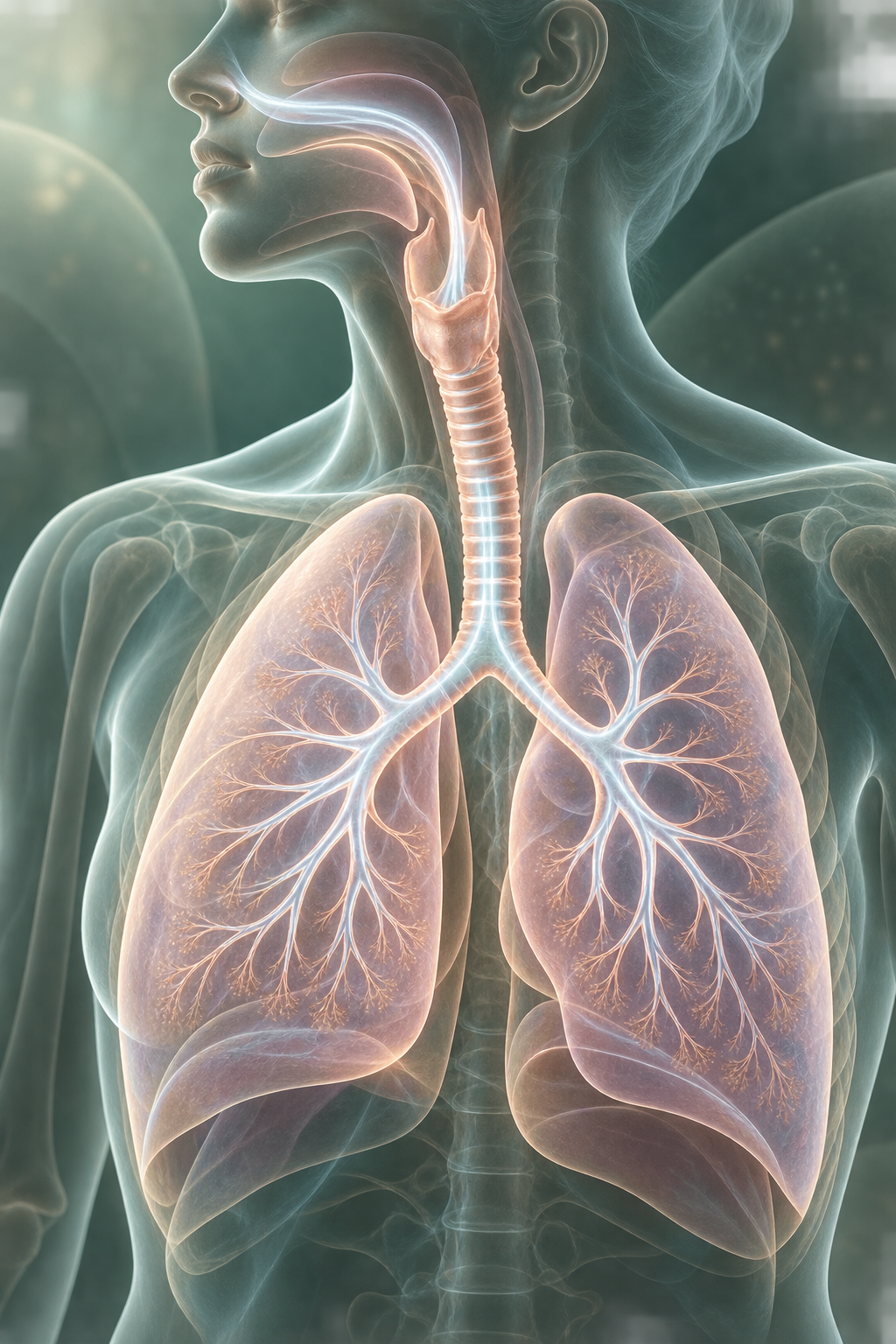
 Homeo Healthcare
 Homeo Healthcare
 Homeo Healthcare
In simple words
Chronic Cough is defined in adult clinical pulmonology as a persistent, bothersome cough lasting for more than 8 consecutive weeks (>4 weeks in pediatric populations). Rather than representing an isolated singular disease entity, chronic cough is fundamentally a neurobiological Cough Hypersensitivity Syndrome (CHS)—characterized by abnormal vagal sensory neural upregulation, low-threshold mechanical/thermal coughing (hypertussia), and throat irritation in response to non-tussive stimuli like talking or scents (allotussia). The overwhelming majority (>90%) of non-smoking adult cases with a normal chest radiograph are driven by the classic pathogenic triad: Upper Airway Cough Syndrome (UACS / post-nasal drip), Cough-Variant Asthma / Non-Asthmatic Eosinophilic Bronchitis (inflammation of the lung's airways) (NAEB), and Gastroesophageal reflux disease (acid reflux causing heartburn) (GERD / laryngopharyngeal reflux).
A cough persisting for >8 weeks in adults (>4 weeks in children) that impairs physical, social, and psychological functioning, requiring a systematic algorithmic clinical workup to identify primary anatomical triggers and neurosensory hypersensitivity.
Common causes
- Upper Airway Cough Syndrome (UACS / Post-Nasal Drip): allergic rhinitis, non-allergic perennial rhinitis, or chronic rhinosinusitis with inflammatory mucus dripping onto laryngeal sensory receptors
- Cough-Variant Asthma and Non-Asthmatic Eosinophilic Bronchitis (NAEB): airway eosinophilic inflammation and hyperresponsiveness where chronic dry cough is the sole presenting manifestation
- Gastroesophageal Reflux Disease (GERD) and Laryngopharyngeal Reflux (LPR): acid or non-acid micro-aspiration and vagally-mediated esophagobronchial cough reflexes triggered by distal esophageal acid exposure
- Pharmacological triggers: Angiotensin-Converting Enzyme (ACE) Inhibitors (e.g., lisinopril, enalapril; causes bradykinin and substance P accumulation in airway tissues; occurs in up to 15% of users)
- Post-Infectious Cough (subacute cough persisting after viral tracheobronchitis, Bordetella pertussis, or Mycoplasma pneumoniae due to transient airway denudation)
- Neurogenic Unexplained / Refractory Chronic Cough (central and peripheral vagal sensory hypersensitivity / sensory neuropathy of the superior/recurrent laryngeal nerves)
Risk Factors
- Active cigarette smoking or chronic secondhand tobacco smoke exposure
- Prescription Angiotensin-Converting Enzyme (ACE) inhibitor antihypertensive therapy
- Atopic diathesis (allergic rhinitis, eczema, personal/family history of asthma)
- Female gender (females possess significantly higher cough reflex sensitivity on capsaicin challenge testing)
- Occupational and environmental exposures to airborne chemical fumes, dust, molds, and biomass smoke
Common symptoms
- Persistent paroxysmal coughing episodes lasting >8 weeks (dry hacking, throat-clearing, or productive with clear mucoid sputum)
- Laryngeal paresthesia: persistent tickling, scratching, tightness, burning, or 'crumb in the throat' sensation triggering an irresistible urge to cough
- Allotussia: coughing triggered by innocuous non-tussive stimuli such as cold air, talking on the phone, laughing, singing, eating dry food, or breathing perfumes/chemical odors
- Nocturnal coughing fits awakening the patient from sleep (characteristic of asthma or severe gastroesophageal reflux)
- Physical complications of chronic coughing: stress urinary incontinence, rib fractures from violent spasms, subconjunctival hemorrhages, post-tussive syncope, hoarseness, and abdominal muscle soreness
Clinical Red Flags
Seek urgent medical attention at an emergency department or primary care clinic if you present with any of the following symptoms:
- Hemoptysis: coughing up frank blood or blood-streaked sputum (requires immediate emergency diagnostic evaluation for lung cancer, pulmonary tuberculosis, bronchiectasis, or pulmonary embolism)
- Systemic 'B-symptoms': rapid unexplained weight loss, drenching nocturnal sweats, and persistent low-grade fevers (suspected Bronchogenic Carcinoma, Tuberculosis, or Lymphoma)
- Progressive dyspnea on exertion, stridor (high-pitched inspiratory sound indicating upper airway obstruction), or dysphagia / painful swallowing (odynophagia)
- New or changing cough in a heavy smoker over the age of 40 (mandates urgent diagnostic Chest CT scan)
- Persistent hoarseness lasting >3 weeks without resolution (requires urgent ENT laryngoscopy to rule out laryngeal malignancy)
Lifestyle & diet support
Maintain a smoke-free home environment and eliminate active tobacco smoking, practice cough suppression techniques (sip cold water, swallow hard, perform purse-lipped breathing when feeling a throat tickle), elevate the head of the bed 6 inches and avoid eating within 3 hours of sleep if reflux is present, use a cool mist room humidifier, and avoid strong chemical aerosol sprays and perfumes.
Treatment Approaches
Conventional Management
Stepwise targeted therapy directed at the identified underlying etiology: (1) For UACS: intranasal corticosteroids (fluticasone) plus second-generation oral antihistamines / decongestants and nasal saline irrigations. (2) For Asthma/NAEB: inhaled corticosteroids (ICS: budesonide, fluticasone) with or without long-acting beta-agonists (LABA) or leukotriene receptor antagonists (montelukast). (3) For GERD/LPR: high-dose proton pump inhibitors (PPIs) plus dietary reflux precautions for 8–12 weeks; addition of prokinetics or baclofen for non-acid reflux. (4) For Refractory / Unexplained Neurogenic Cough: central cough neuromodulators (gabapentin, pregabalin, low-dose amitriptyline), Speech and Language Therapy (SLT; cough suppression behavioural techniques), or peripheral P2X3 receptor antagonists (gefapixant).
Homeopathic Approach
Homeopathic constitutional and respiratory remedies (such as Drosera Rotundifolia, Rumex Crispus, Spongia Tosta, Bryonia Alba, Ipecacuanha, Antimonium Tartaricum, Kali Bichromicum, Pulsatilla Nigricans, Causticum, Hepar Sulphuris) serve as supportive care to soothe laryngeal tickling, relieve spasmodic fits, and assist mucus clearance alongside chest radiograph screening, allergy management, and pulmonology evaluation.
Frequently Asked Questions
Clinical & academic detailShow detailHide detail
Diagnosis & tests
Investigation Protocol
Evaluated via an evidence-based anatomical-diagnostic algorithm (ACCP / BTS Guidelines): (1) Chest Radiograph (CXR PA view; mandatory first-line test to rule out occult lung cancer, pneumonia, bronchiectasis, and active pulmonary tuberculosis). (2) Medication Review (discontinuing ACE inhibitors with a 4-week observation period). (3) Spirometry with Bronchodilator Reversibility and Methacholine Inhalation Challenge (evaluating for asthma / airway hyperresponsiveness). (4) Induced Sputum Eosinophil Count / Fractional Exhaled Nitric Oxide (FeNO; identifying eosinophilic airway inflammation). (5) 24-hour Ambulatory Esophageal pH-Impedance Monitoring (for refractory reflux-induced cough). (6) High-Resolution CT (HRCT) Chest and diagnostic Bronchoscopy for unexplained abnormal radiographs or alarm features.
Differential Diagnosis
Differentiate Chronic Cough from Bronchogenic Lung Carcinoma, Pulmonary Tuberculosis (chronic cough, night sweats, hemoptysis, weight loss), Bronchiectasis (copious daily foul purulent sputum), Chronic Obstructive Pulmonary Disease (COPD / chronic bronchitis), Interstitial Lung Disease (ILD / idiopathic pulmonary fibrosis; dry velcro bibasilar crackles), Congestive Heart Failure ('cardiac asthma' with orthopnea and pedal edema), and Foreign Body Aspiration.
Differential Diagnosis Matrix
Differentiate Chronic Cough from Bronchogenic Lung Carcinoma, Pulmonary Tuberculosis (chronic cough, night sweats, hemoptysis, weight loss), Bronchiectasis (copious daily foul purulent sputum), Chronic Obstructive Pulmonary Disease (COPD / chronic bronchitis), Interstitial Lung Disease (ILD / idiopathic pulmonary fibrosis; dry velcro bibasilar crackles), Congestive Heart Failure ('cardiac asthma' with orthopnea and pedal edema), and Foreign Body Aspiration.
Reference Citations & Evidence Sources
Classical Homeopathic Literature
- CIT-0007Hahnemann S.. "The Chronic Diseases: Their Peculiar Nature and Their Homoeopathic Cure." Adolph Arnold (1828).
Materia Medica & Keynotes
- CIT-0004Hahnemann S.. "Materia Medica Pura." Adolph Arnold (1811).
- CIT-0005Kent J. T.. "Lectures on Homoeopathic Materia Medica." Boericke & Tafel (1905).
- CIT-0006Boericke W.. "Pocket Manual of Homoeopathic Materia Medica." Boericke & Runyon (1901).
Clinical Reviews & Textbooks
- CIT-0023National Center for Complementary and Integrative Health. "Homeopathy: What You Need To Know." National Institutes of Health (2021).
Clinical Connections
Related Remedies
Seeking Expert Consultation?
Book an online video session with Dr. Narayan Jethwani to get an individualized constitutional homeopathic protocol tailored to your case.
Medical Safety Disclaimer
All content on the Homeo Healthcare platform is strictly for educational purposes and is not personal medical advice, diagnosis, or treatment. Homeopathic remedy considerations are provided for clinician review or require individualized consultation with a qualified physician. Never delay seeking professional medical advice or emergency medical care due to content you have read on this website.